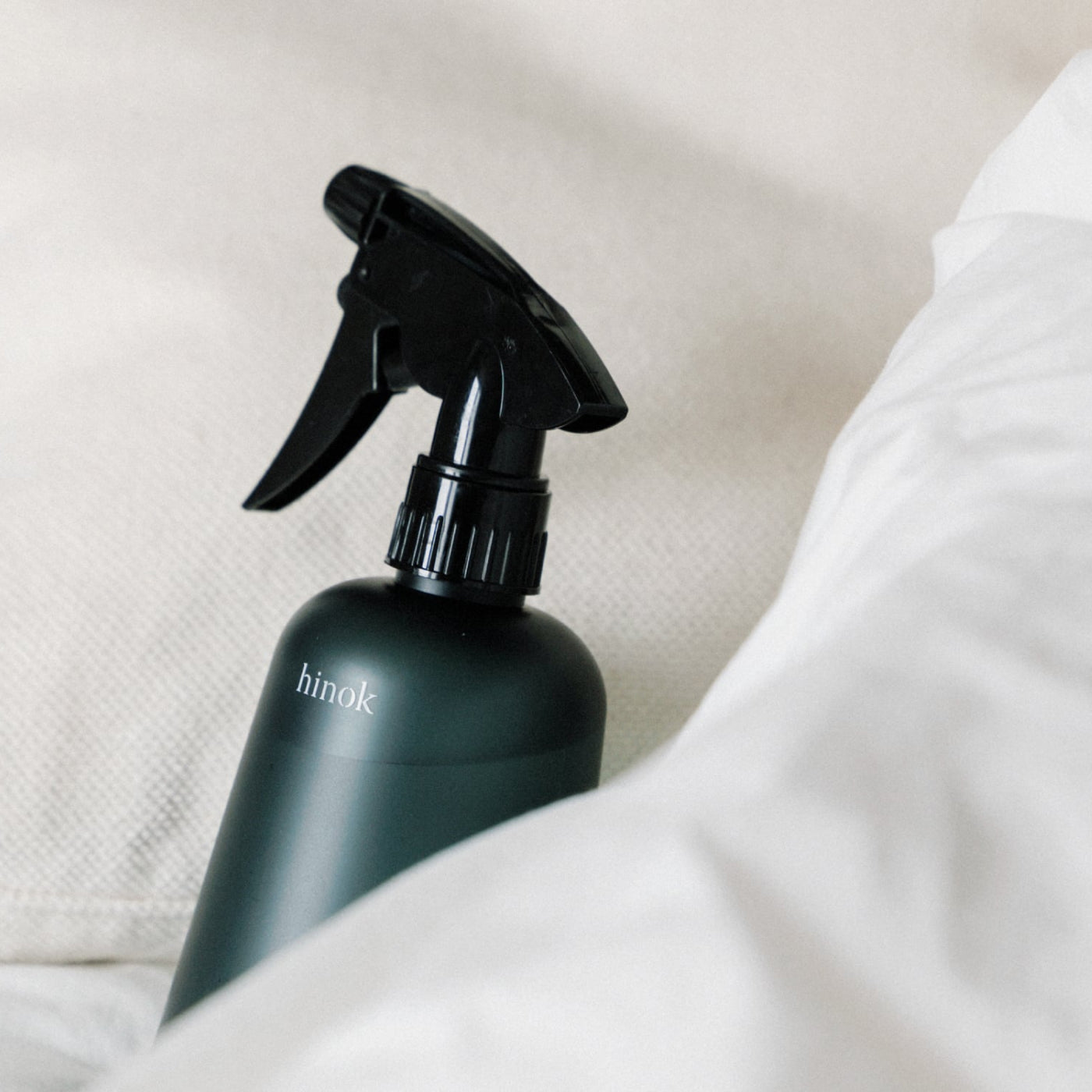
Hinok spray is made from 100% steam-distilled Jeju hinoki cypress water — rich in natural phytoncides that deodorize fabrics and spaces without a single drop of alcohol or artificial fragrance. Every bottle begins with upcycled branches and fallen leaves from 30-year-old trees grown in Jeju's volcanic-ash soil. No trees are felled. No solvents are used. Just steam, patience, and a deep respect for the forest that makes it all possible.

It Begins in the Hush of a Jeju Forest
On Jeju Island — a UNESCO World Natural Heritage site off the southern coast of South Korea — hinoki cypress trees have grown quietly for decades. Rooted in volcanic-ash soil, nourished by ocean breezes, these trees reach 30 years and older without human intervention. They don't need pesticides. Their natural defense is phytoncides — antimicrobial compounds released into the air to ward off insects and pathogens.
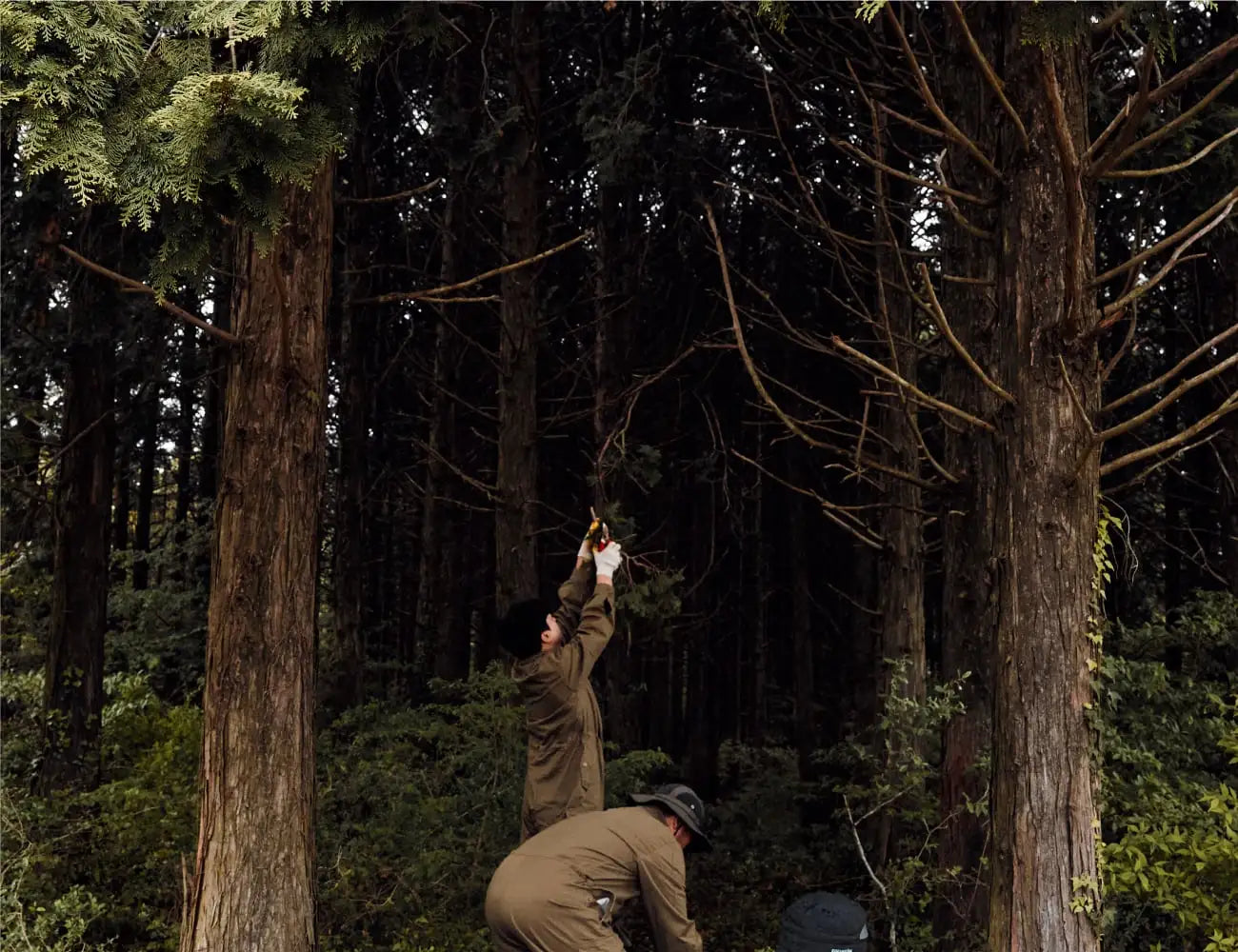
Hinok sources its raw material from a forest in Ara-dong, Jeju, in partnership with the Jeju Native Plant Research Institute. The collaboration is deliberately gentle: only pruned branches and naturally fallen leaves are gathered during routine forest maintenance. The trees themselves are never cut. The forest stays whole.
This is what Hinok calls "upcycled sourcing" — finding value in what the forest naturally lets go.
What Phytoncides Do — and Why They Matter
Phytoncides are volatile organic compounds that trees emit to protect themselves. Among all species, hinoki cypress is one of the richest sources. When you walk through a hinoki forest, that clean, woody scent isn't just pleasant — it's biologically active.
Research published in the Journal of Physiological Anthropology found that olfactory stimulation from hinoki cypress leaf oil reduced prefrontal cortex activity and increased parasympathetic nervous response — the body's natural relaxation mode. Separate studies documented that exposure to hinoki phytoncides significantly increased natural killer (NK) cell activity while reducing stress hormones including cortisol, adrenaline, and noradrenaline.
This is the science behind shinrin-yoku — forest bathing — a practice formally recognized in Japan since the 1980s, with hinoki cypress forests at its origin.
Hinok's spray captures these same phytoncides in liquid form. A mist on your bedding. A spray on a jacket before heading out. The forest, distilled into a daily gesture of care.
Steam, Not Solvents — How Hinok Extracts Its Essence
At a hillside laboratory beneath Hallasan — Jeju's volcanic peak — Hinok's extraction process unfolds over two unhurried hours.
Pruned branches and leaves are placed in steam distillation chambers. Gentle heat draws out the hinoki water — no aggressive temperatures, no chemical solvents. The result is a pure concentrate rich in phytoncides.
From there, Hinok employs what they call the Oxygen Refreshing technique: captured Jeju air is used to purify the hinoki water further, eliminating the need for harsh additives. The entire process stays on the island, from forest to bottle.
The finished product is alcohol-free, fabric-safe, and pet-friendly. Dermatological testing confirmed an irritation index of 0.00. It is free from 23 harmful ingredients and 25 known allergens, and certified vegan by PETA.
What remains after distillation? The spent plant material is fermented and returned to the forest floor as compost — nourishing the soil that will grow the next generation of hinoki.
A Product Line Built on Consideration
Hinok's philosophy — "Etiquette, Distilled" — extends beyond a single spray.
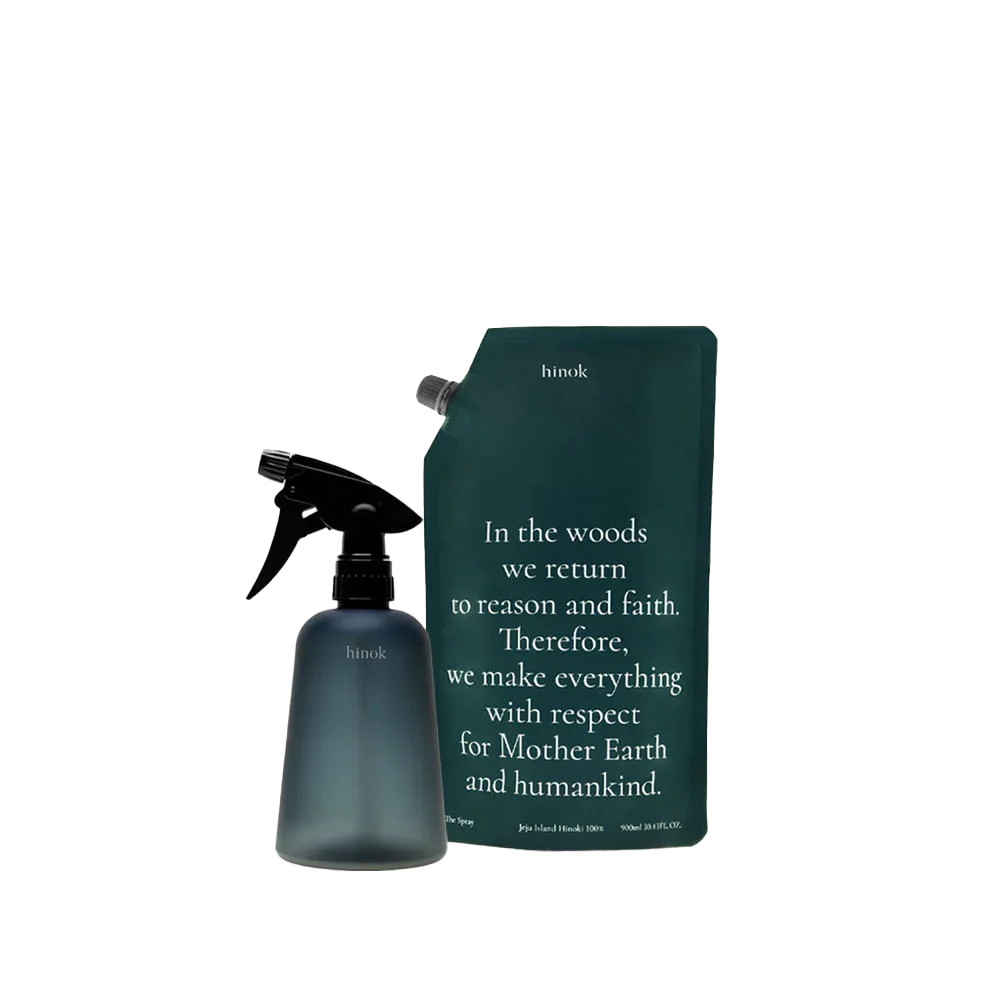
The Spray ($40 for 450ml) is the cornerstone: a considerate deodorizer for fabrics and spaces. Low-residue, proven gentle across 12 different fabric types, effective against three major odor categories. It ships with a refillable bottle and a refill pouch — sustainability built into the first purchase.
The Hand Wash ($45, 15.2 fl oz) brings the same hinoki essence to daily hygiene. Antibacterial without being harsh, it transforms a routine moment into something closer to ritual.
The Hand Balm ($25, 1.2 fl oz) completes the sequence — soft hands without residue, infused with the calm of Jeju cypress.
Each product carries the same promise: clean ingredients, verified efficacy, and a five-year "Long Life Service" warranty on reusable containers. Hinok also became the first Korean brand to partner with rePurpose Global, certifying its operations as Plastic Neutral.
The Quiet Luxury of Everyday Calm
In a market where fabric spray demand is projected to grow from $767 million to over $2 billion by 2034, the pull toward plant-based and alcohol-free formulations is unmistakable. Consumer interest in upcycled ingredients has surged — product launches featuring upcycled components rose 196% between 2020 and 2025.
But Hinok isn't chasing a trend. The brand was built on a principle older than any market report: that care begins with consideration. Consideration for the forest that provides. For the fabrics that clothe and shelter us. For the spaces we share with others.
"Not an air freshener," Hinok states simply. "A quiet ritual that respects the room — and everyone in it."
From a volcanic island forest to the sleeve of your jacket, the journey is deliberate. Gentle. Considered. That's the point.
What is Hinok spray made of?
Hinok spray is made from 100% steam-distilled Jeju hinoki cypress water, rich in natural phytoncides. The hinoki extract comes exclusively from upcycled branches and fallen leaves of 30-year-old trees grown in Jeju's volcanic-ash soil — no trees are ever felled. The formula is alcohol-free, certified non-irritating with a 0.00 irritation index, vegan, and free from 23 harmful ingredients and 25 known allergens.
Frequently Asked Questions
Q: Is Hinok spray safe for all fabrics?
A: Yes. Hinok spray has been tested on 12 different fabric materials through SEM and appearance evaluation by a professional testing institute. The alcohol-free, low-residue formula is designed to be gentle on clothes, bedding, and linens.
Q: What makes Hinok different from conventional fabric sprays?
A: Hinok uses 100% steam-distilled Jeju hinoki cypress water as its active ingredient instead of synthetic fragrances or alcohol-based formulas. It contains natural phytoncides that deodorize without masking odors and has a certified irritation index of 0.00.
Q: Is Hinok environmentally friendly?
A: Hinok sources only upcycled branches and fallen leaves, never felling trees. Post-extraction plant material is composted and returned to the forest. The brand is Plastic Neutral through partnership with rePurpose Global and promotes a refill-first packaging model.
Q: What are phytoncides in Hinok products?
A: Phytoncides are naturally occurring antimicrobial volatile organic compounds produced by hinoki cypress trees. Research shows they can reduce stress hormones, boost immune cell activity, and provide antibacterial and deodorizing benefits.